The difference between confirming and explaining the concept of time
The concept of time is studied in numerous disciplines and belongs to none. So don’t get swept along by popular science claims that the latest physics is on the way to unlocking the mysteries of time! Physics applies logical forms of reasoning (particularly mathematics) to the objects of experience. Like number, time is one of the primitive concepts which underpin that reasoning method.
Since physics is predicated on temporal concepts such as frequency, velocity and momentum, it cannot appeal to its own discoveries in order to explain the logical concepts that it applies! At best, those discoveries can only confirm that the adopted reasoning method fits properly with observation. Relativity Theory’s geometric model of spacetime actually resurrects two ancient arguments about space and time:
1) Eternalism – the view that events do not evolve, but coexist in a changeless composition.
2) Substantivalism – the claim that extension is a concrete property of physical objects rather than an abstract conceptual relationship between them.
What transforms the geometry of spacetime into a physical model is the use of measured physical constants to dimension its interval lengths, i.e. the use of light speed c to dimension the directrix under the hyperbola and a combination of c and the Newtonian gravitational constant G to dimension the geodesics on the curved surfaces of Riemann geometry.
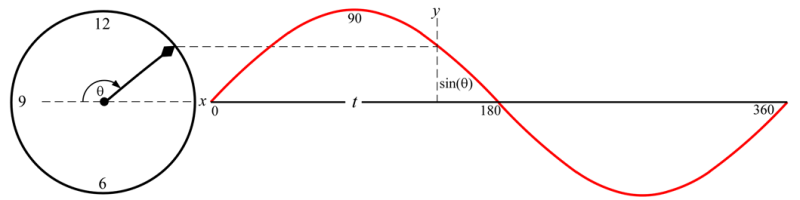
Without those equivalences, we are left simply with a geometric object that requires no reference to the observed world because its form is reducible to the kind of algebraic equations which use dimensionless measures such as π, sine, cosine, etc.
Hence, the final chapters of this book examine how physics uses geometry and diagrams to build its models of the world. Like most models, physical ones present dilemmas as well as answers. For example, they appear to sanction time travel, they don’t perfectly predict the results of astronomical surveys. Einstein’s choice of a dimensioning constant κ = 8πG/c4 is 8π greater than the value one would expect from Planck’s system of natural constant dimensioning, which incorporates one more essential constant, the quantum of action h. Here is a discussion of that last issue which is too technical to include in a book which strives to show the value of pictures for any student of time, regardless of their disciplinary background:
https://youtube.com/video/LUm049ZAdf0
Preprint of paper about spacetime dimensioning
Paper Workings and Calculators
 Picturing Time